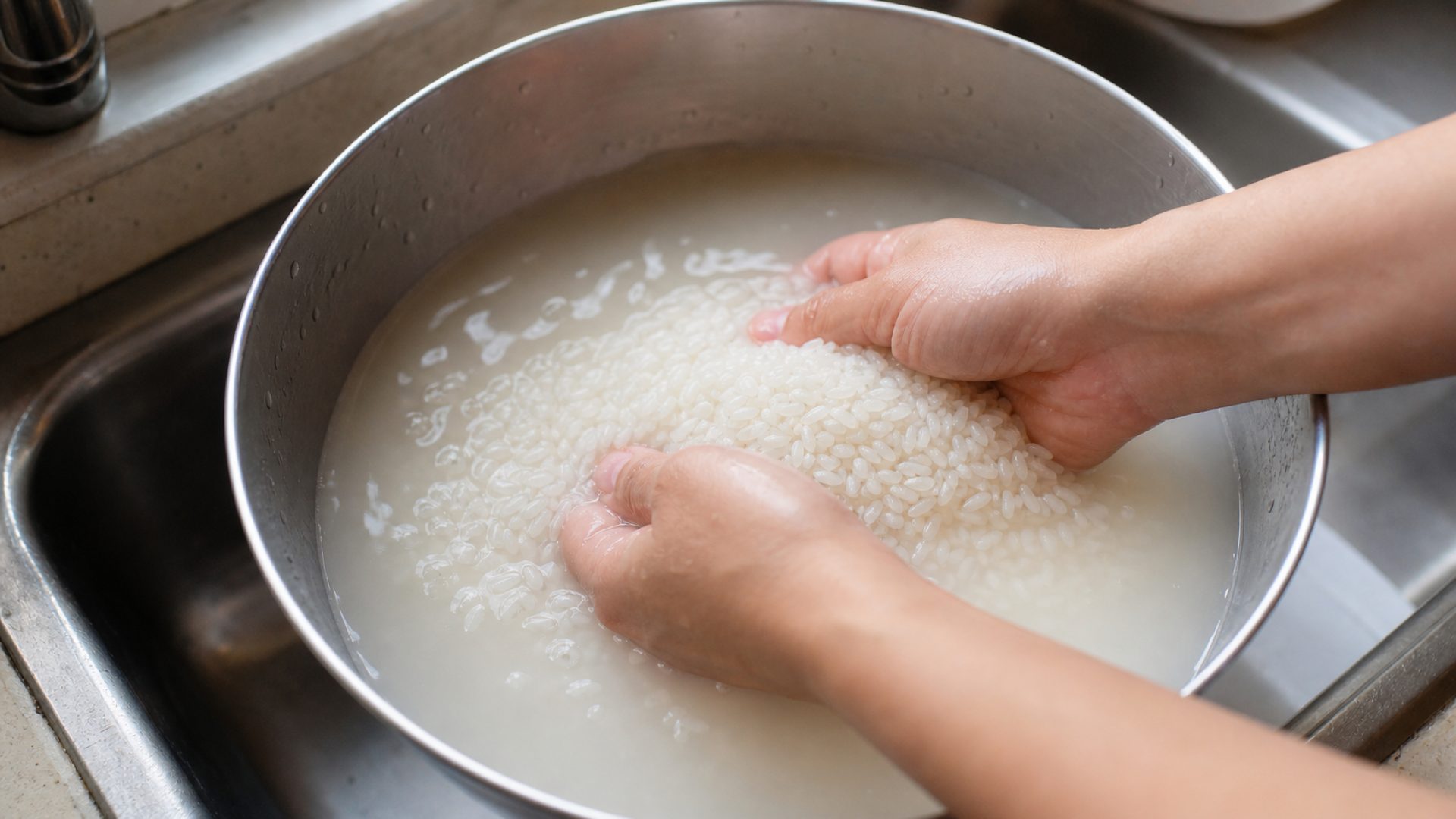
Most Japanese kids learn to wash rice with one hand on the bowl. Here's why, and why your colander is the problem.
Rinsing rice isn't fussy. Rice cooker makers say rinsing affects the surface starch, and with it the texture. What's fussy is doing it with American kitchen tools.
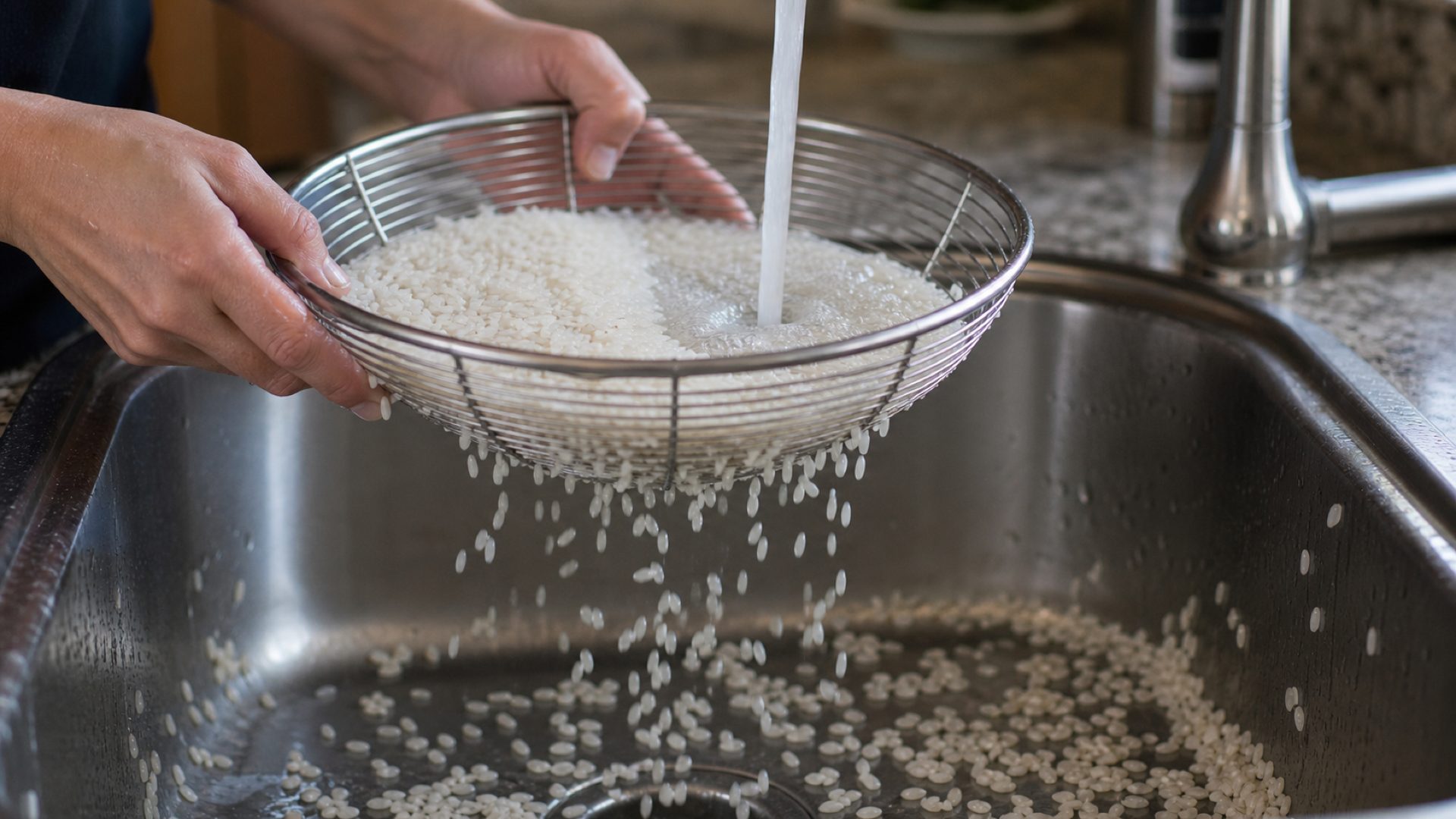
Skip the rinse, or dump the rice in a colander under the tap and watch a few hundred grains go down the drain. Then the disposal deals with it, or doesn't.
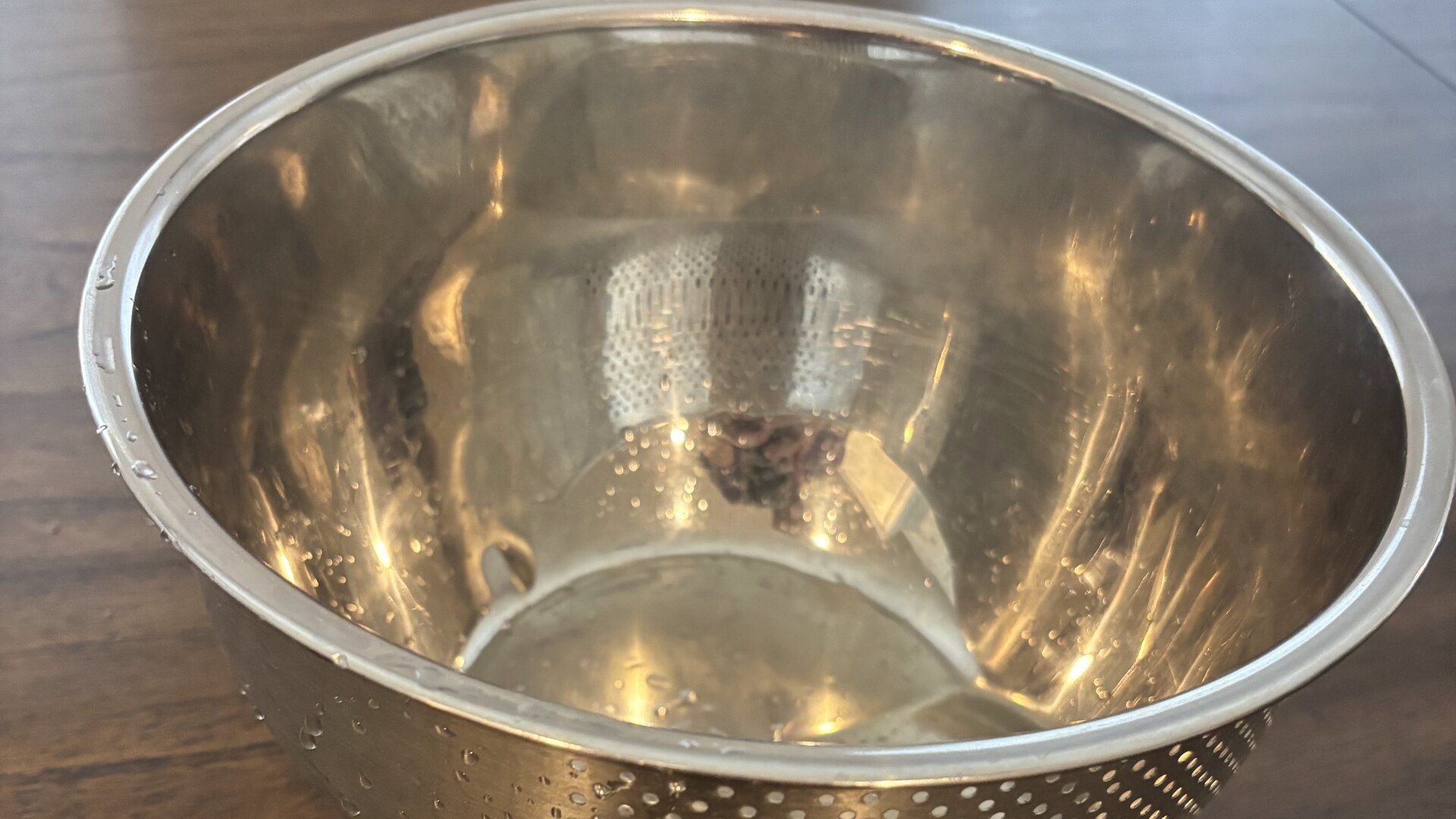
A bowl with slots up the side and holes in the bottom. Swirl, tip, pour. The water goes, the rice stays. Two or three rounds until the water is only a little cloudy, then into the cooker.
In Japan, washing rice is a chore you get handed at about age eight. You put the rice in a bowl, add water, swirl it with your fingers, tip the bowl to pour the cloudy water off, and repeat. The hand on the bowl's edge is there to hold the rice back. The reason usually goes unsaid. You just do it, the same way you'd learn to crack an egg.
It wasn't until I moved to Las Vegas and watched a friend rinse rice in a pasta colander that I realized how much of that chore depends on the bowl. Half his rice went through the holes.
Why rinse at all
Two reasons, both from the people who make rice cookers. Zojirushi's FAQ says modern milling "cannot completely polish away bran and residues from the surface of the rice," and the cloudy water you see is, as the California grower Koda Farms puts it, "simply naturally occurring rice starch." Leave the loose starch on and the grains glue together as they cook. Rinse it off and they stay separate.
Zojirushi's method is specific: stir the dry rice about thirty times, add water, drain, and repeat two or three times. Their blog adds the stopping rule — until the water "begins to run clear." Not perfectly clear. Slightly cloudy is fine; a little starch is what makes Japanese rice stick to chopsticks.
Why your colander fights you
A colander is built for pasta. Most have openings large enough to lose short-grain rice, so the first rinse is a slow leak. A mesh strainer holds the rice but is awkward to swirl in, and the starch water pools in the bowl underneath instead of leaving. A regular mixing bowl works, but pouring off the water with one hand cupped over the rim is the skill that takes Japanese kids a few years to get clean.
Then there's the drain. The grains you lose don't disappear. One Atlanta plumbing company puts it plainly: a disposal "mashes the rice and pasta and creates a thick paste" that can stop the disposal or clog the line. In Japan, rice down the drain isn't a plumbing issue mostly because the bowl doesn't let it happen.
The bowl Japan uses instead
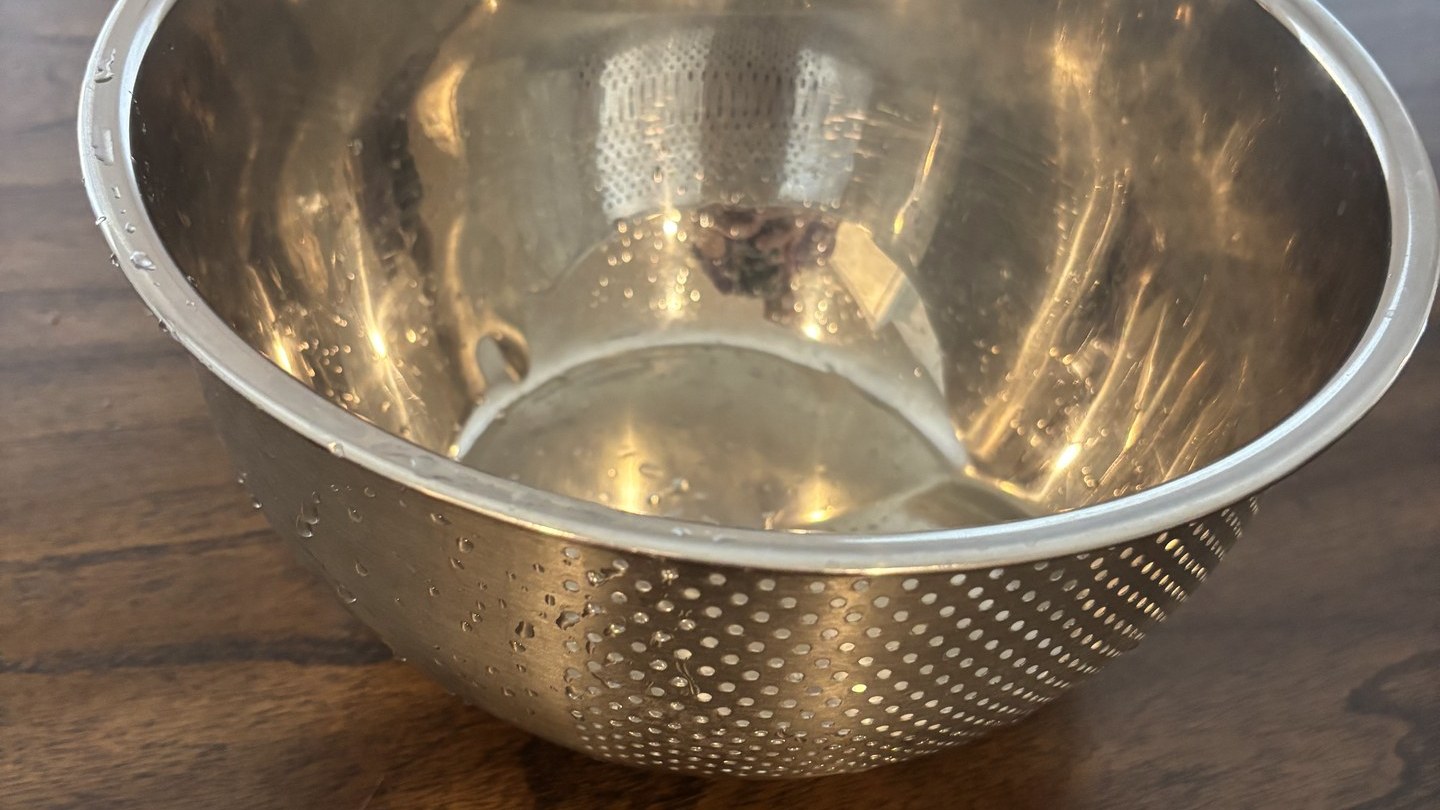
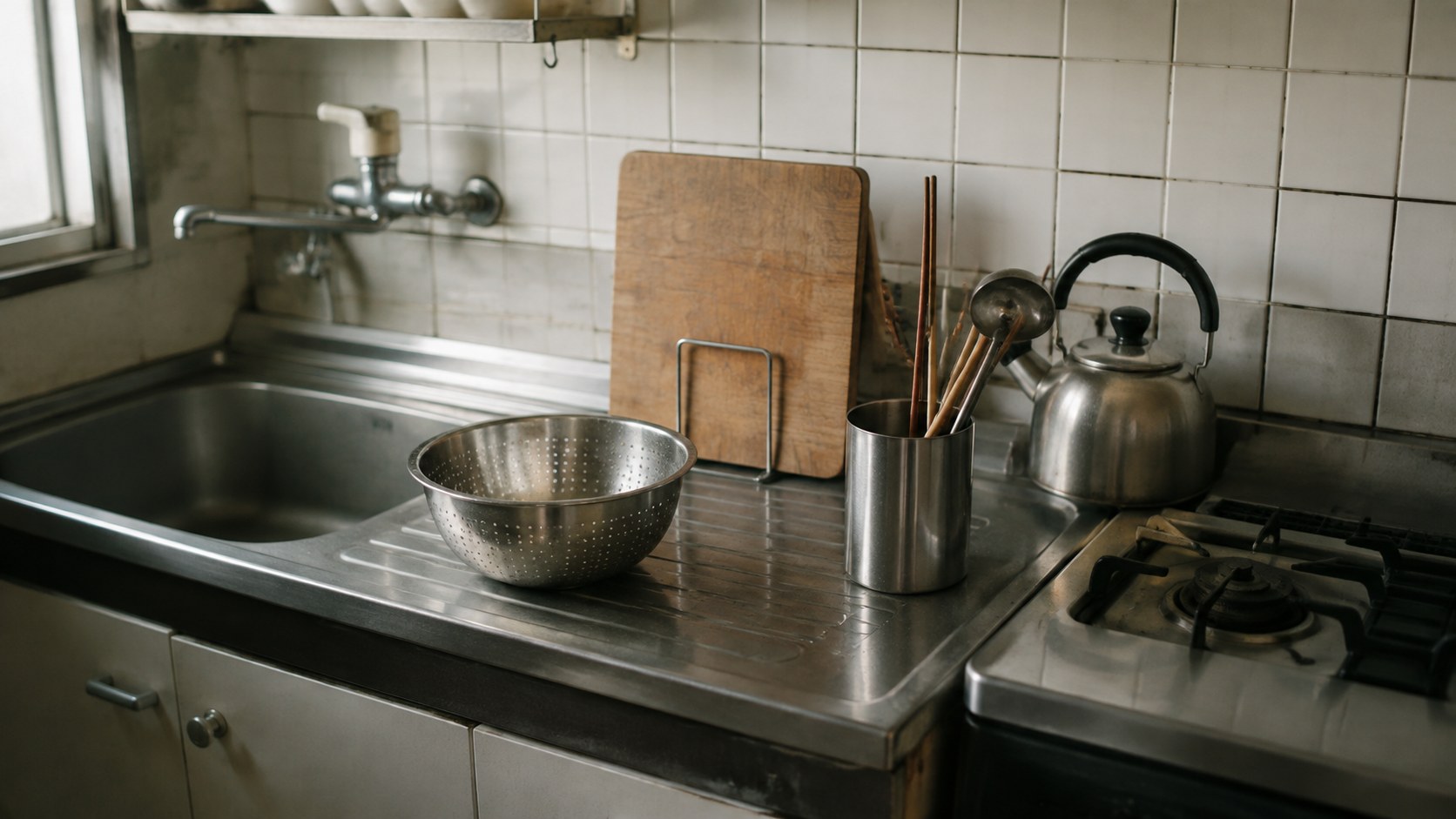
The answer is a bowl that drains without a separate strainer. The plastic version, sold in Japanese housewares aisles, has narrow slots up one side and small holes in the base: you swirl, tip toward the slots, and the water leaves while the rice can't. The stainless version from the Tsubame-Sanjo metalworking towns does the same job with perforated walls and shrugs off decades of use. Both fit in a sink the size of a shoebox, which is what they were designed for.
Japan owns more rice cookers per household than almost anything else in the kitchen — over 95% since 1980, by the government's own count — and eats about four times the rice per person that Americans do. When a country does something that often, the tool gets good. I compared the ones you can buy on Amazon.com by material, capacity and how they drain in the article below. It's a spec-based comparison; I haven't cooked with each of them.
No rush. The rice will still be there next week.
Sources: Zojirushi America, rice cooker FAQ and "How to wash rice"; Koda Farms, Kokuho Rose product page; Government of Japan, Highlighting Japan (Nov 2020) on rice cooker ownership; Japan MAFF, Food Balance Sheet FY2024 (rice, 53.4 kg per person) for the Japanese figure and USDA per-capita estimates for the United States via Choices Magazine (2024); Mr. Plumber Atlanta, garbage disposal tips.