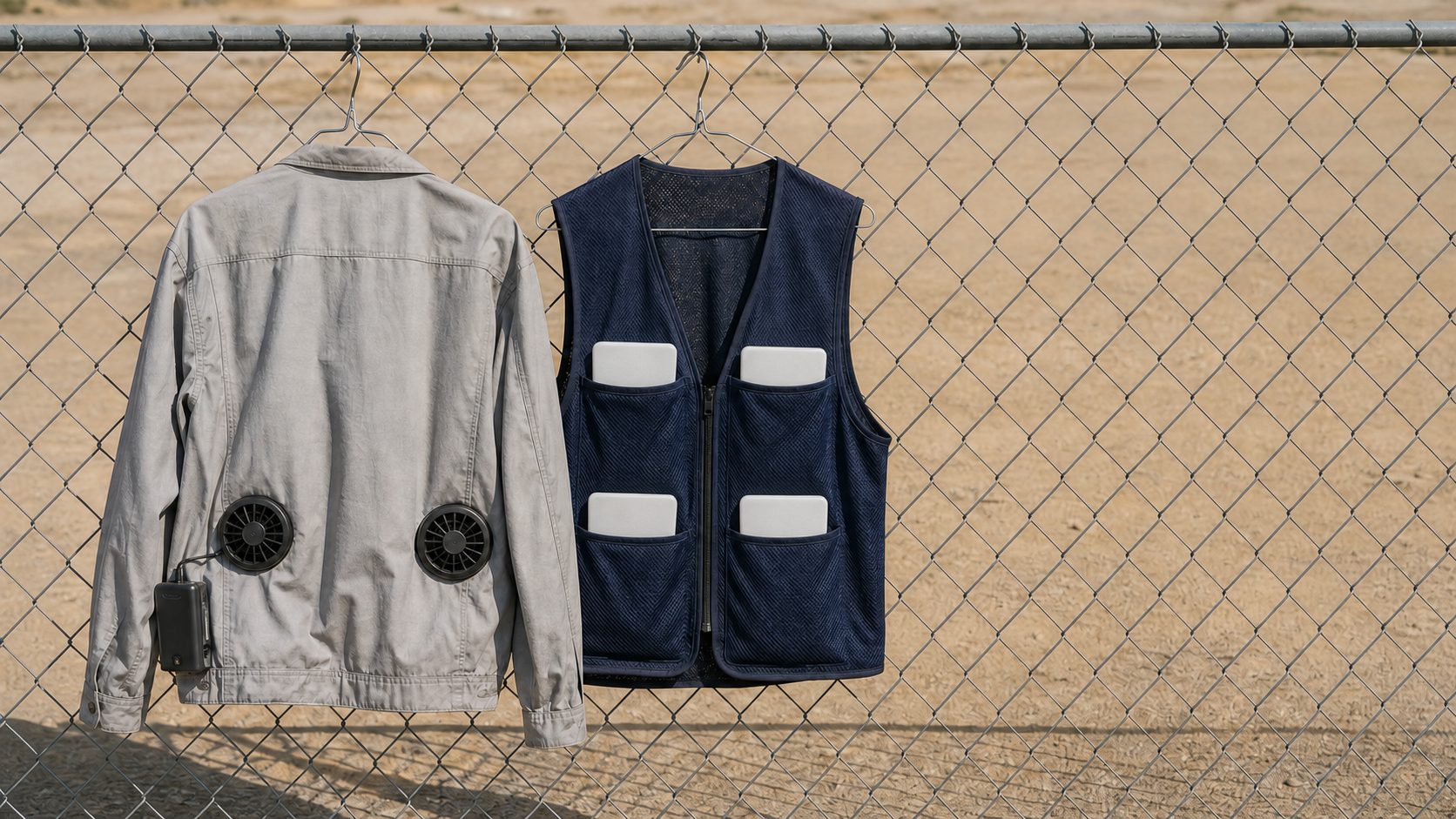
Fan vest vs ice vest: one runs 15 hours, the other runs 2.5. That's not the whole story.
Japan's answer moves air. America's answer freezes packs. Which one fits your day depends on three things: how long you're out, how humid it is, and whether there's a freezer nearby.
Frozen packs in pockets pull heat off your torso. Cold from minute one, done in two to three hours, then it needs a freezer or a cooler of ice water.

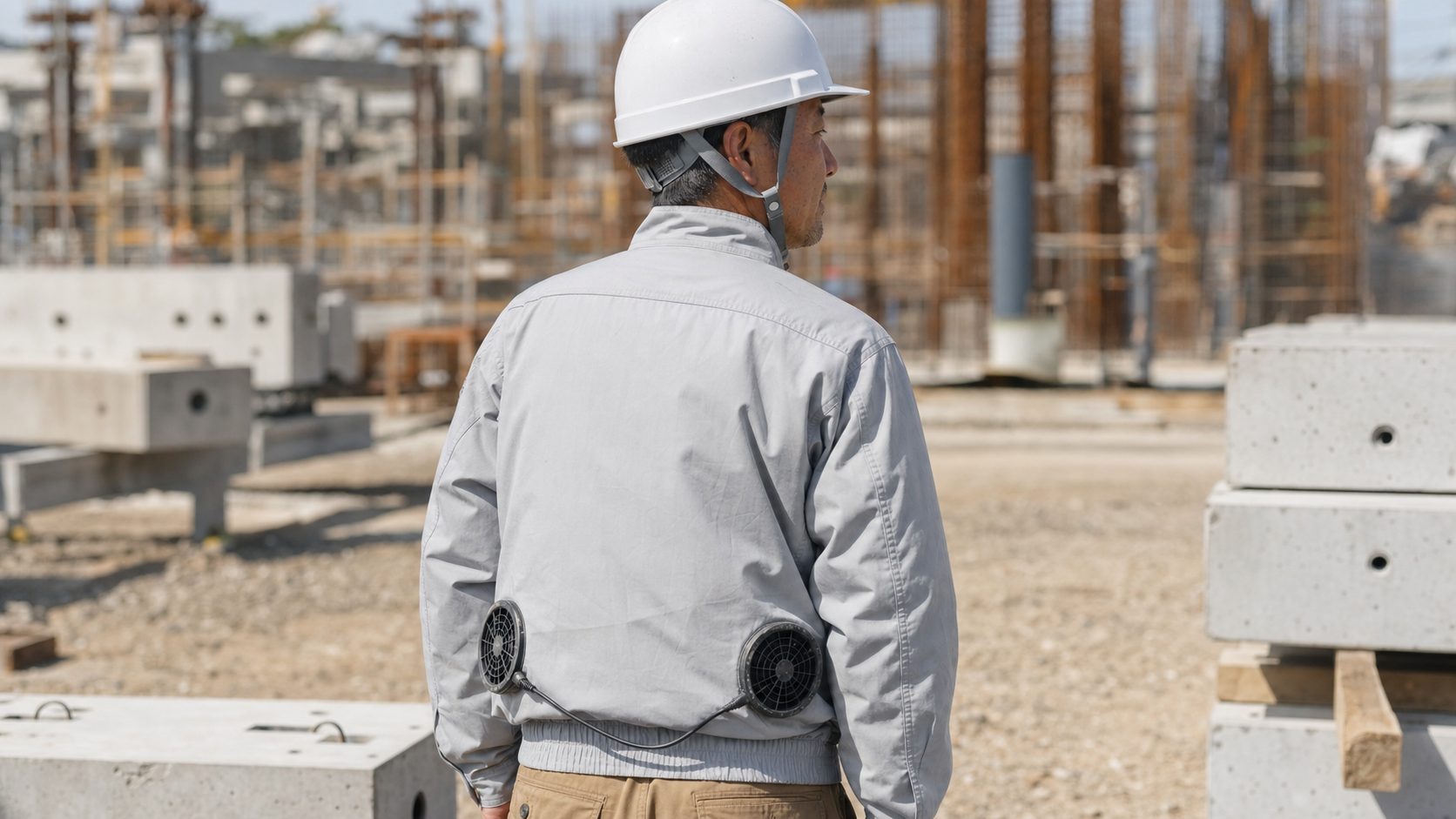
Two fans pull air across your shirt and your sweat does the cooling. Never cold, but it keeps going as long as the battery does — up to 15 hours on one charge.

I get asked this one way or another whenever the fan jacket comes up: "Isn't an ice vest better?" The honest answer is that they're not competing for the same day. One is a sprint. The other is a marathon. Here's how to tell which day you have.
Not for you if…
- You work indoors with AC — neither of these is worth the money
- Your site requires FR-rated gear — the fan jackets here aren't FR; Glacier Tek and TechNiche sell models described as fire-resistant — verify the exact ASTM/NFPA/arc rating your site requires before buying
- You want something that feels cold on contact and you only need it for an hour — buy the ice vest and stop reading
Three things that decide it
Hours away from a freezer. Glacier Tek's packs hold 59°F for up to 2.5 hours; TechNiche's for 2 to 3. Recharging takes about 20–30 minutes in ice water (Glacier Tek's own page states both figures) or about an hour in a freezer. A fan jacket on a 5.0Ah Makita battery runs up to 15 hours on high. If your shift is eight hours and the nearest freezer is at home, the math is done.
Humidity. Fans cool by evaporating sweat. Makita's own manual says the jacket "may not be effective if the air temperature and/or humidity are higher than those inside the jacket," and OSHA notes that high humidity "makes it difficult for the body to cool itself through sweating." In drier air like Nevada or Arizona, evaporation has more to work with; the more humid it gets, the more an ice or PCM vest matters. On a job site, follow your employer's heat plan — OSHA weighs WBGT, workload and PPE, not humidity alone.
Weight and feel. An ice vest is heavy — TechNiche lists 2.7 kg (about 6 lb) loaded, Glacier Tek about 5 lb — and it's cold, which some people love and some hate. A fan jacket weighs about what a jacket weighs plus a battery. It moves air across the skin rather than chilling it.
Side by side
Makita DFJ304Zfan jacket · 18V · cotton
Not for: humid climates; anyone who wants cold on contact.
Glacier Tek Cool VestPCM packs · 59°F
Not for: long shifts with no way to re-freeze packs. About 5 lb loaded.
Ergodyne Chill-Its 6665evaporative · soak 2–5 min
Not for: humid air (it can't evaporate); anyone who hates a damp shirt.
Runtime and temperature figures are the manufacturers' stated values (Makita, Glacier Tek, TechNiche, Ergodyne pages and manuals), checked August 2026. This is a spec-based comparison; I have not lab-tested any of these.
Which one, in one line each
A note on safety
Neither of these replaces water, shade and rest breaks, and neither prevents heat illness on its own. Dizziness, heavy sweating or weakness means stop working and cool down. Confusion, fainting or slurred speech are signs of heat stroke — that is a 911 call, with rapid cooling while help is on the way, and heat stroke can happen while someone is still sweating. This site is not medical or safety advice.
No rush. The vests will still be there next week.